
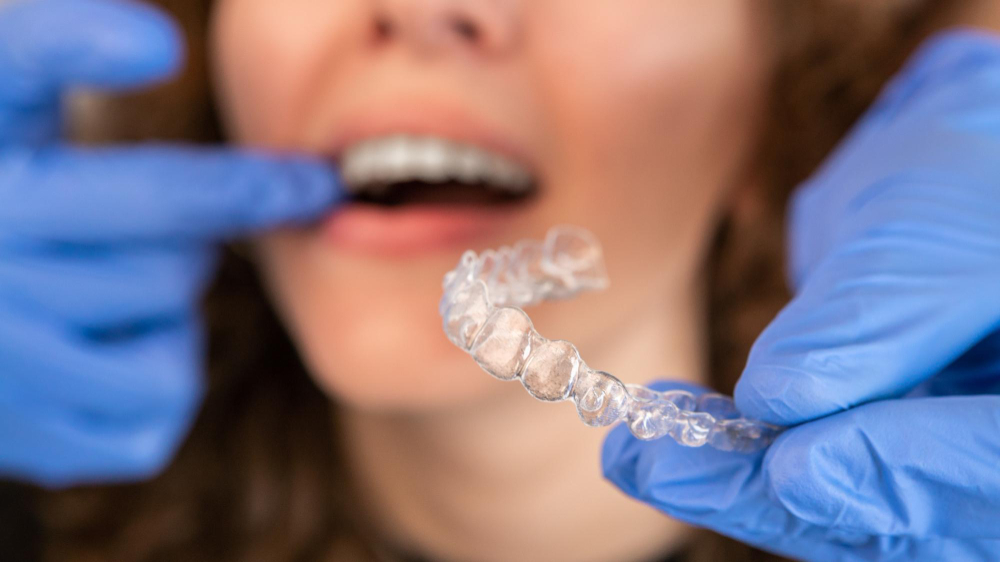
More adults than ever are choosing to straighten their teeth, and Invisalign has become a popular alternative to traditional metal braces. Here’s how the two options compare.
What’s the biggest difference between Invisalign and braces?
Invisalign uses a series of clear, removable trays to gradually move teeth, while traditional braces use fixed brackets and wires that stay in place throughout treatment.
Which option is less noticeable?
Invisalign trays are made of clear plastic and are much less noticeable than metal brackets and wires, which is a major reason many adults prefer it for professional and social settings.
Can I eat normally with each option?
With Invisalign, trays are removed before eating, so there are no food restrictions. With traditional braces, certain hard, sticky, or chewy foods need to be avoided to prevent damaging the brackets and wires.
Which treatment works faster?
Treatment time varies by case for both options, but many patients complete Invisalign treatment in 12 to 18 months, similar to or sometimes faster than traditional braces for mild to moderate cases.
Is one option better for complex alignment issues?
Traditional braces are often better suited for more complex bite or alignment issues, while Invisalign works well for mild to moderate crowding, spacing, and bite concerns.
Wondering which option is right for you? Call (860) 635-3993 to schedule a consultation and discuss your orthodontic goals.